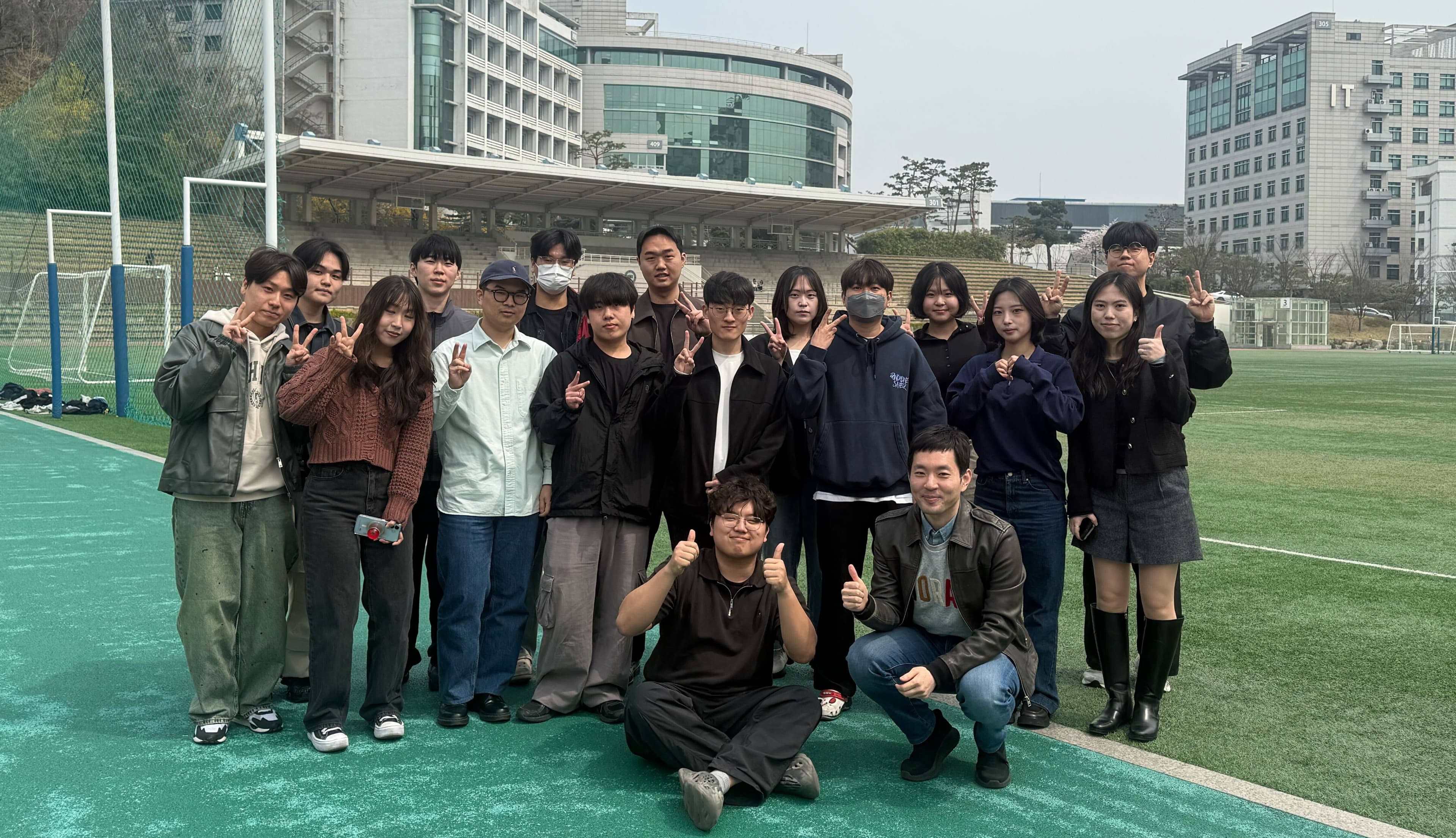
Welcome to Computer Vision & Spatial AI Lab
Advancing the frontiers of vision computing and artificial intelligence
Explore Our ResearchLab News
Our Research Areas
Visual/Sensor-based Localization
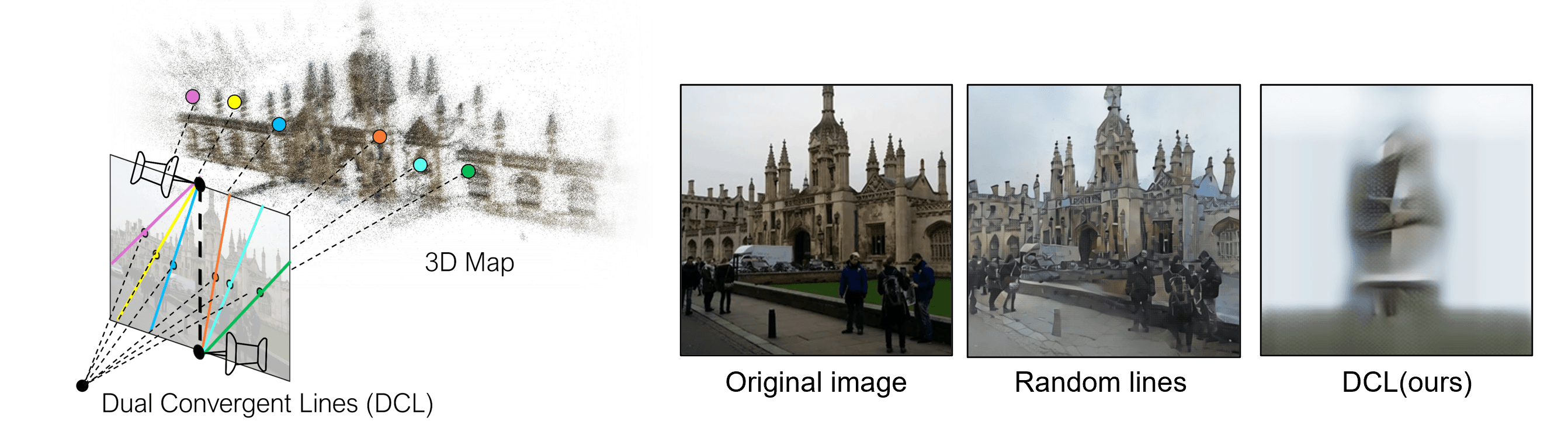
Privacy-Preserving Localization
Our lab conducts research in 3D Vision, Visual Localization, Geometric Vision, and Spatial AI. Recently, we have been expanding our research on Privacy-Preserving Visual Localization, which aims to estimate camera poses without exposing original images or sensitive visual information. We are looking for new students who are interested in studying geometric obfuscation, secure image query representations, and privacy-preserving localization algorithms. This research aims to enable the safe use of camera-based Spatial AI services in applications such as AR, robotics, autonomous driving, and digital twins. Students with interests in 3D Vision, Visual Localization, Deep Learning, Geometry, Optimization, and Privacy-Preserving AI are welcome to apply.
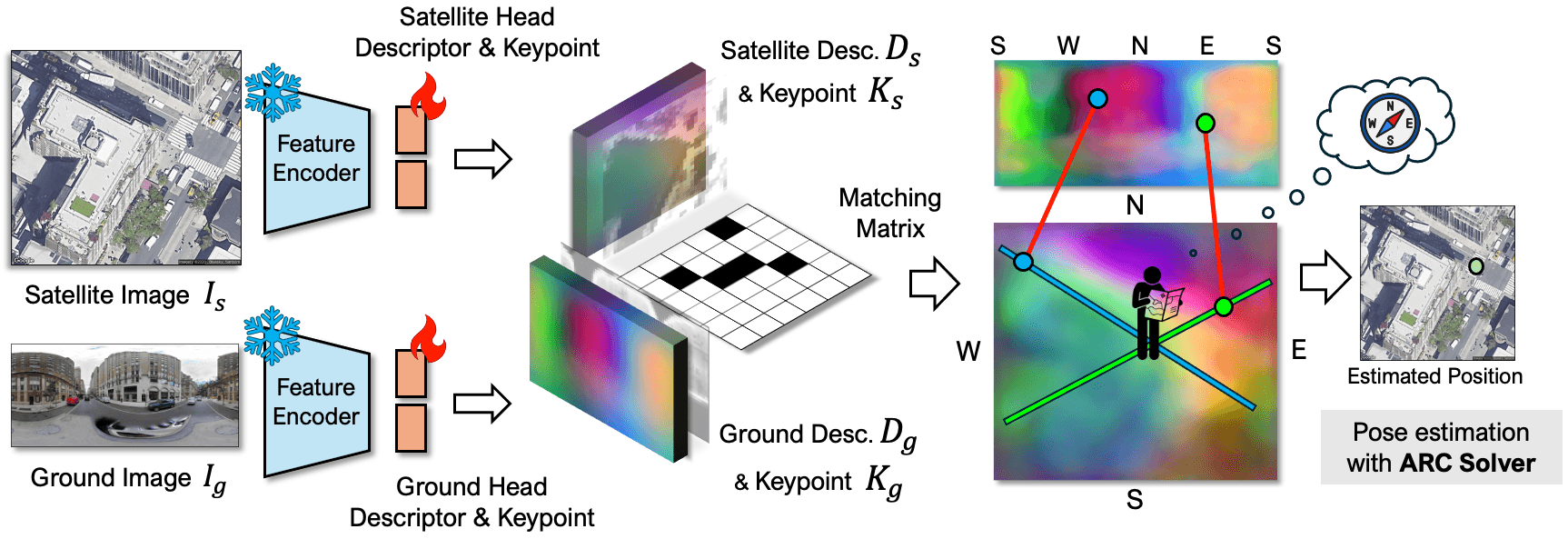
Cross-View Localization
Cross-view localization is a computer vision problem that estimates the location and orientation of a ground-level camera by matching ground-view images with aerial or satellite maps. It is challenging because the two views are captured from drastically different perspectives, causing significant changes in appearance, scale, geometry, and visible structures. This field combines deep visual representation learning, cross-view image matching, and geometric pose estimation. It has important applications in autonomous driving, mobile robotics, navigation systems, and geo-spatial AI, especially when GPS signals are unavailable, inaccurate, or unreliable. In the future, this research will be extended beyond image-to-satellite localization toward LiDAR-cross-view localization and UAV-cross-view localization.
LiDAR Localization
Our research centers on learning-based 3D localization, which aims to infer precise 3D poses using deep learning techniques. Among various approaches, we explore Scene Coordinate Regression (SCR): a method that predicts dense or sparse 3D scene points directly from sensor data like 2D images (camera) or 3D scans (LiDAR, Radar). Not only limited to single modality approaches, we explore sensor-fusion based localization methods to remain robust against outdoor environment.
3D Segmentation/Shape Matching/Reconstruction/Reassembly
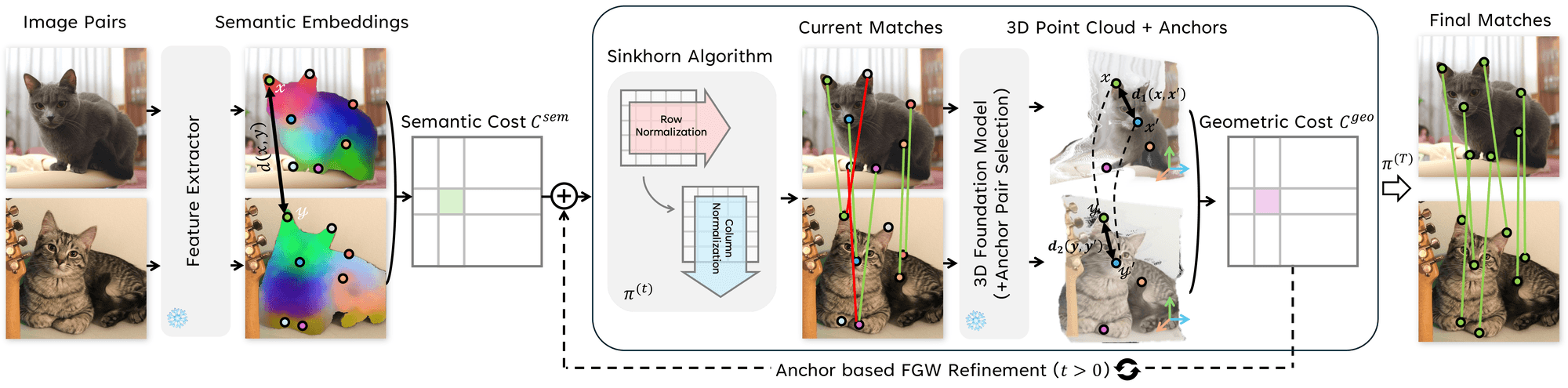
Semantic Correspondence
Our research develops correspondence learning methods that identify matching parts across 3D objects with different shapes, poses, and deformations. By combining geometric structure, semantic information, and optimal transport, we aim to support robust shape understanding, object analysis, and spatial reasoning.
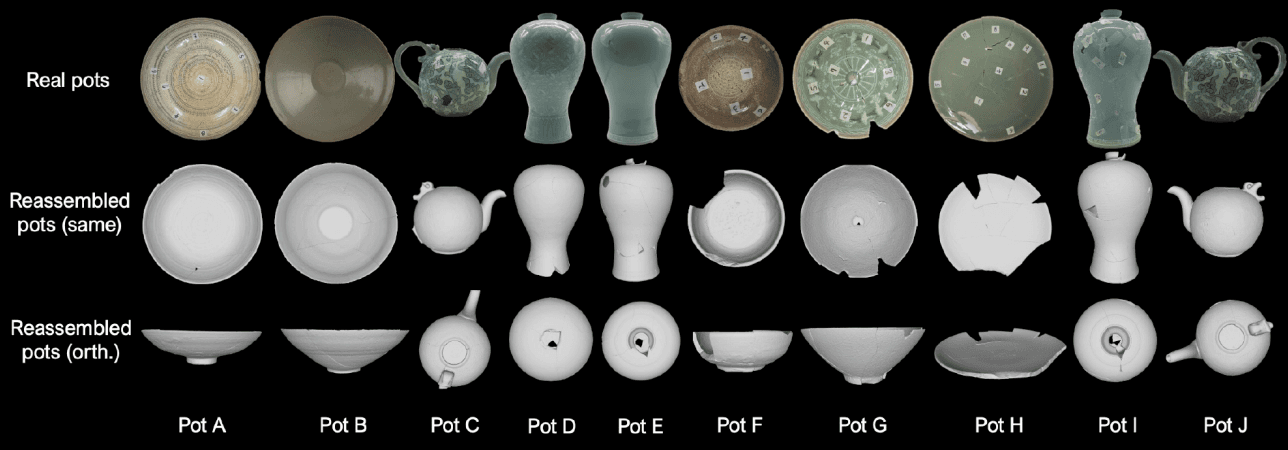
Object Reassembly
Our research focuses on reconstructing fragmented objects by estimating the unknown poses of individual fragments and assembling them into their original forms. We combine correspondence learning, geometric reasoning, and optimization to enable applications such as artifact restoration, 3D reconstruction, robotics, and AR/VR.
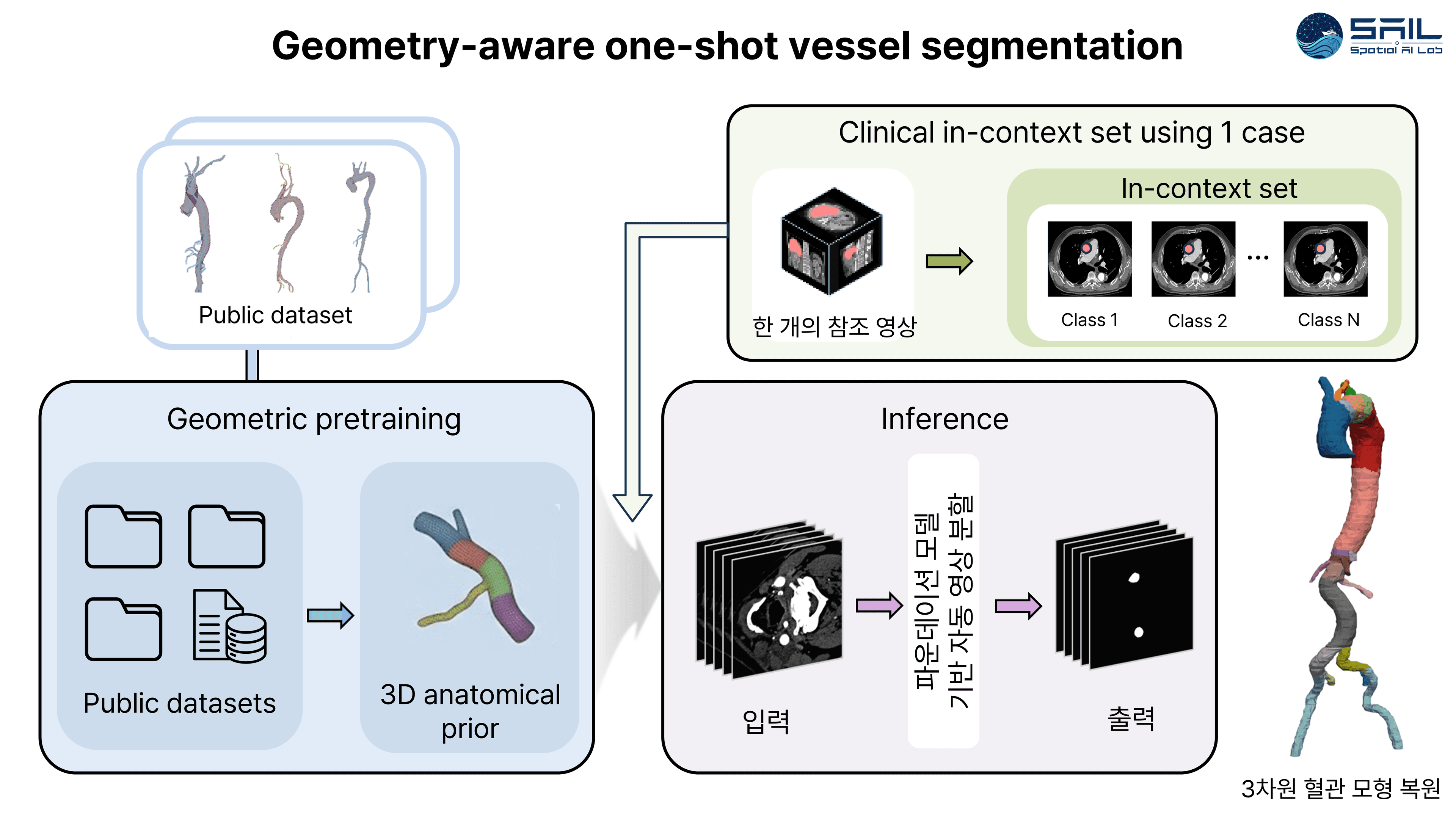
Segmentation
Vascular segmentation plays a crucial role in medical image analysis as it enables the extraction of valuable information regarding blood vessels. Accurate vessel delineation facilitates volumetric quantification and the reconstruction of patient-specific 3D vascular meshes, which serve as essential foundations for hemodynamic simulations and the assessment of blood flow and pressure dynamics.
Multimodal/Multi-view Anomaly Detection and Defect Synthesis
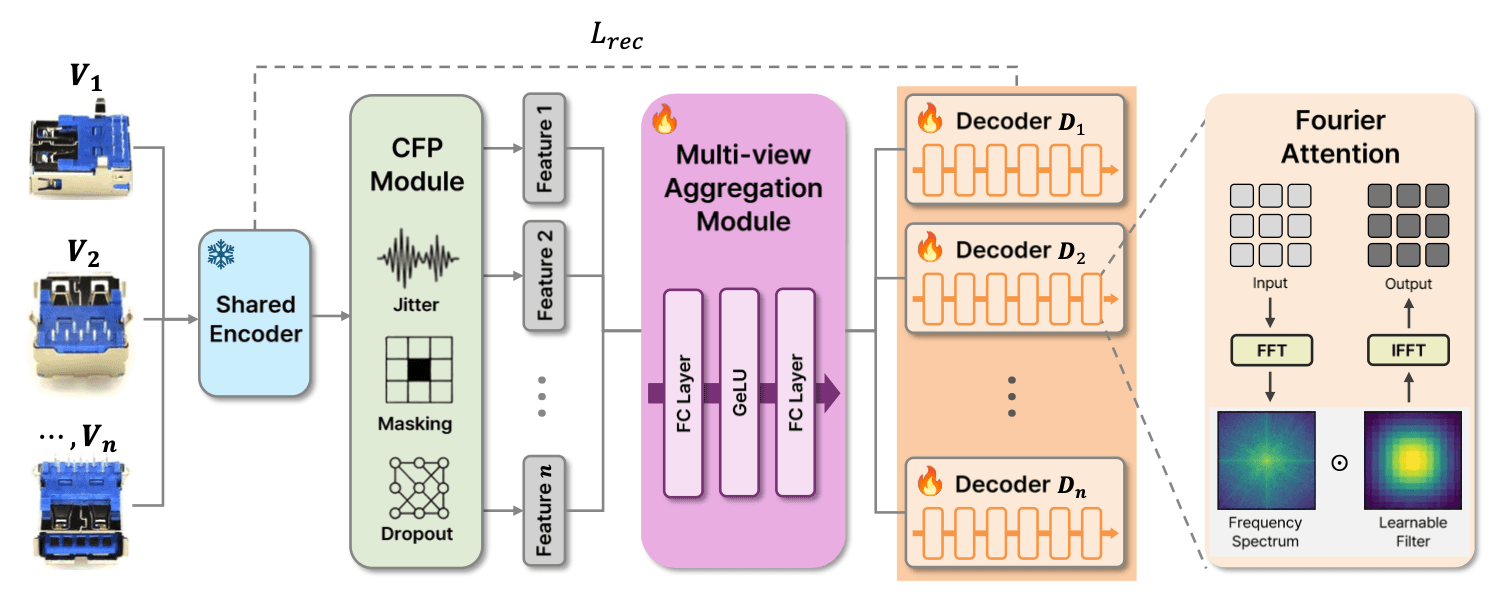
Multi-view Anomaly Detection
Multi-view anomaly detection focuses on inspection settings where the same object or scene is observed from multiple viewpoints. We develop methods that integrate visual cues across different camera views to improve defect detection and localization when a single viewpoint is incomplete, ambiguous, or occluded. Relevant topics include multiview feature alignment, viewpoint-aware representation learning, cross-view consistency, and robust evaluation protocols for detection and segmentation performance.
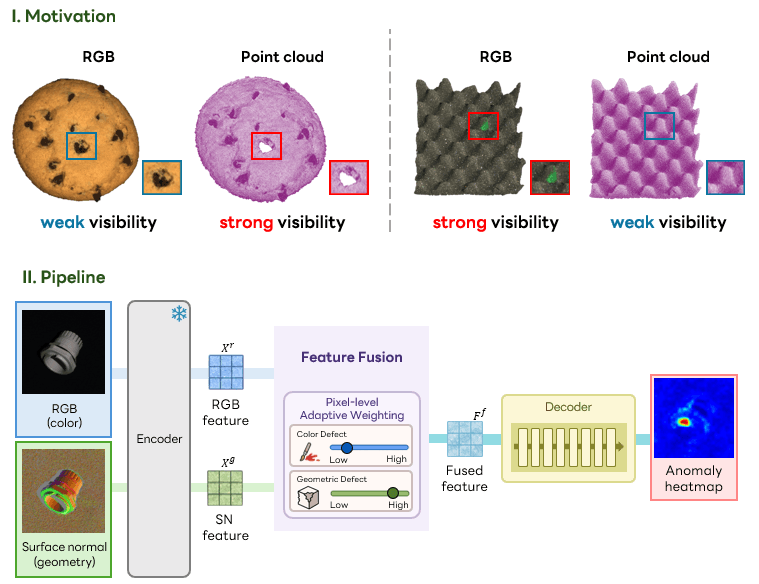
Multi-modal Anomaly Detection
Real inspection environments often provide multiple sensors, data sources, or complementary information channels such as images, text descriptions, metadata, or sensor measurements. We study multimodal anomaly detection methods that combine these heterogeneous sources to detect and localize rare defects more reliably under limited supervision, domain shift, and high visual diversity. This direction is well suited for students interested in computer vision, deep learning, multimodal representation learning, robust feature fusion, and practical AI systems for manufacturing or inspection.
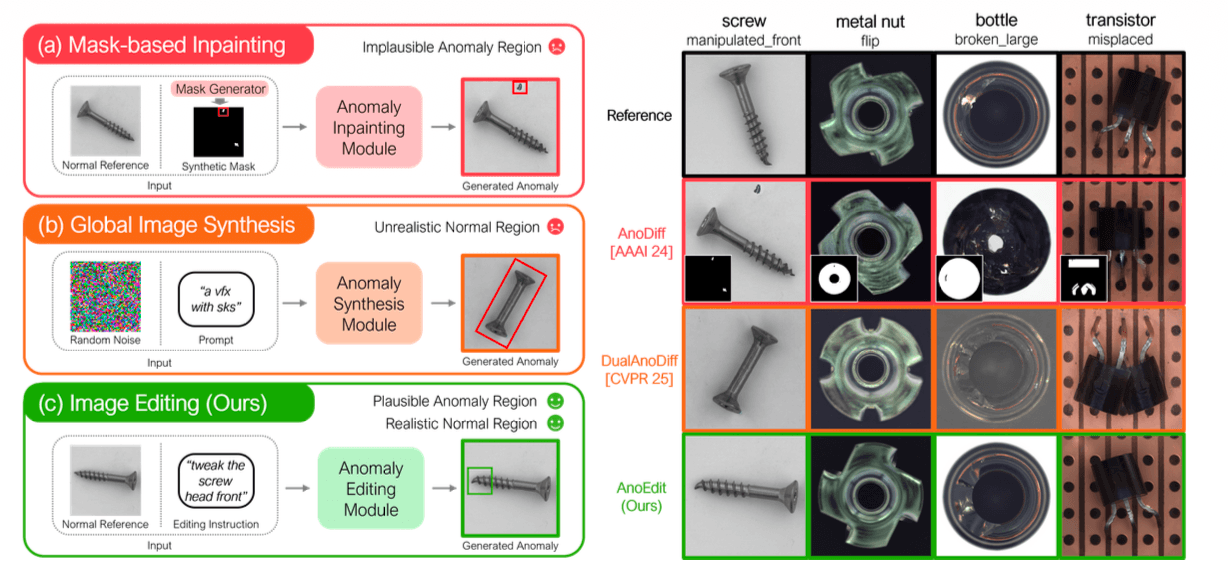
Defect Image Generation & Editing
We are recruiting students interested in generative models for addressing data scarcity in real-world visual inspection scenarios. Research directions include synthetic defect generation, diffusion-based image editing, few-shot anomaly generation, mask-guided inpainting, domain adaptation, and downstream evaluation using detection or segmentation models. The goal is to generate realistic and diverse abnormal samples that improve the reliability of industrial inspection systems when real defect data are rare or expensive to collect.
Physics-informed AI and Vision-Language Models (VLMs)
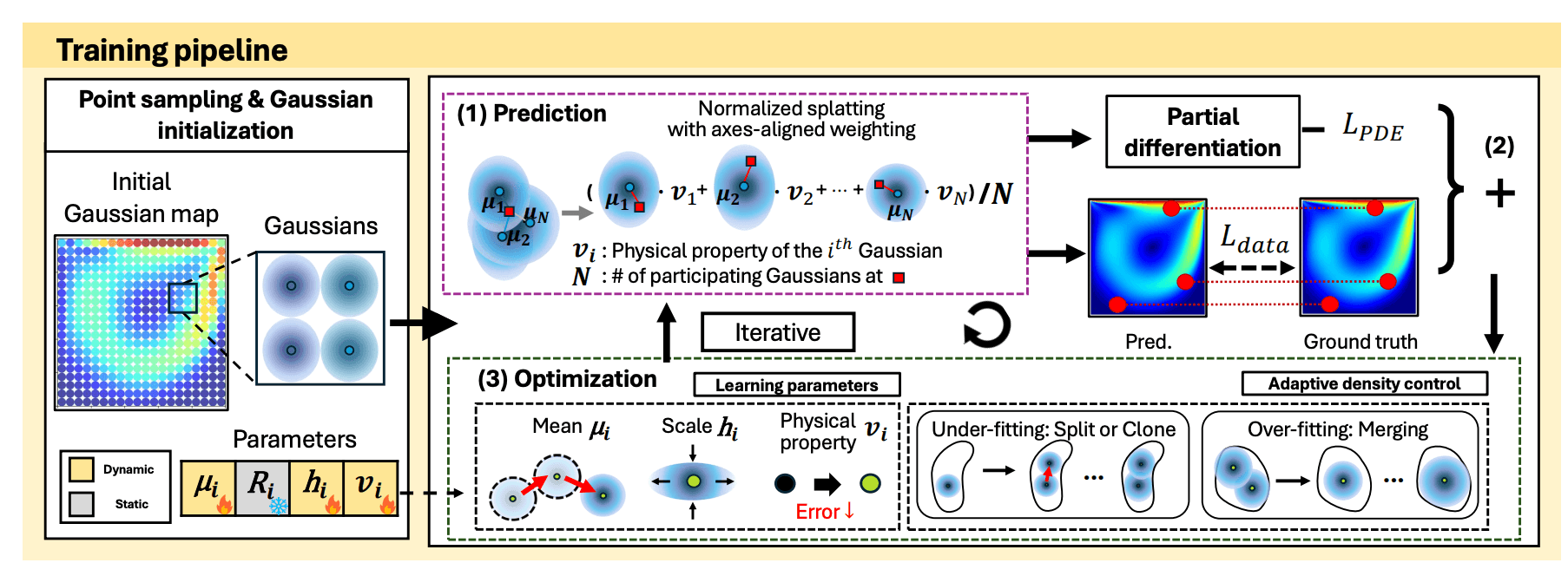
Physics-Informed Learning
Our lab conducts research in Physics-Informed Machine Learning, which integrates physical laws with data-driven learning. Using methods such as Physics-Informed Neural Networks, inverse problem solving, and neural representations, we aim to develop models that produce physically consistent and interpretable predictions, even with limited data. This research addresses the generalization and interpretability limits of purely data-driven deep learning, with applications in 3D Vision, Scientific/Engineering Simulation, and physical field reconstruction. We welcome students interested in Deep Learning, Physics-Informed AI, Optimization, Scientific Machine Learning, Neural Representations, and 3D Vision.
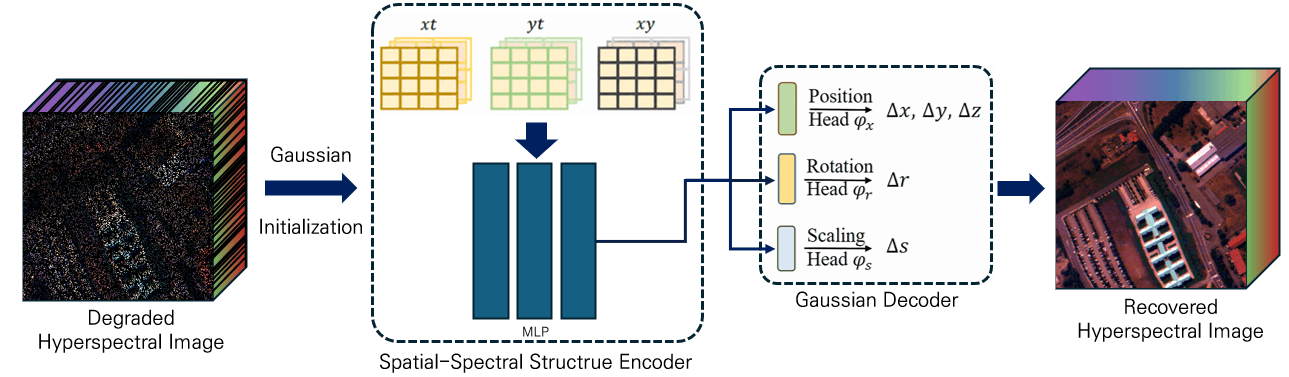
Hyperspectral Image Super-Resolution
Hyperspectral image super-resolution and restoration aim to recover high-quality spectral-spatial information from low-resolution, noisy, or degraded hyperspectral observations. Unlike RGB images, hyperspectral data contain rich spectral signatures across many wavelength bands, making it important to enhance spatial details while preserving spectral fidelity. We study deep learning methods for hyperspectral super-resolution and image restoration.
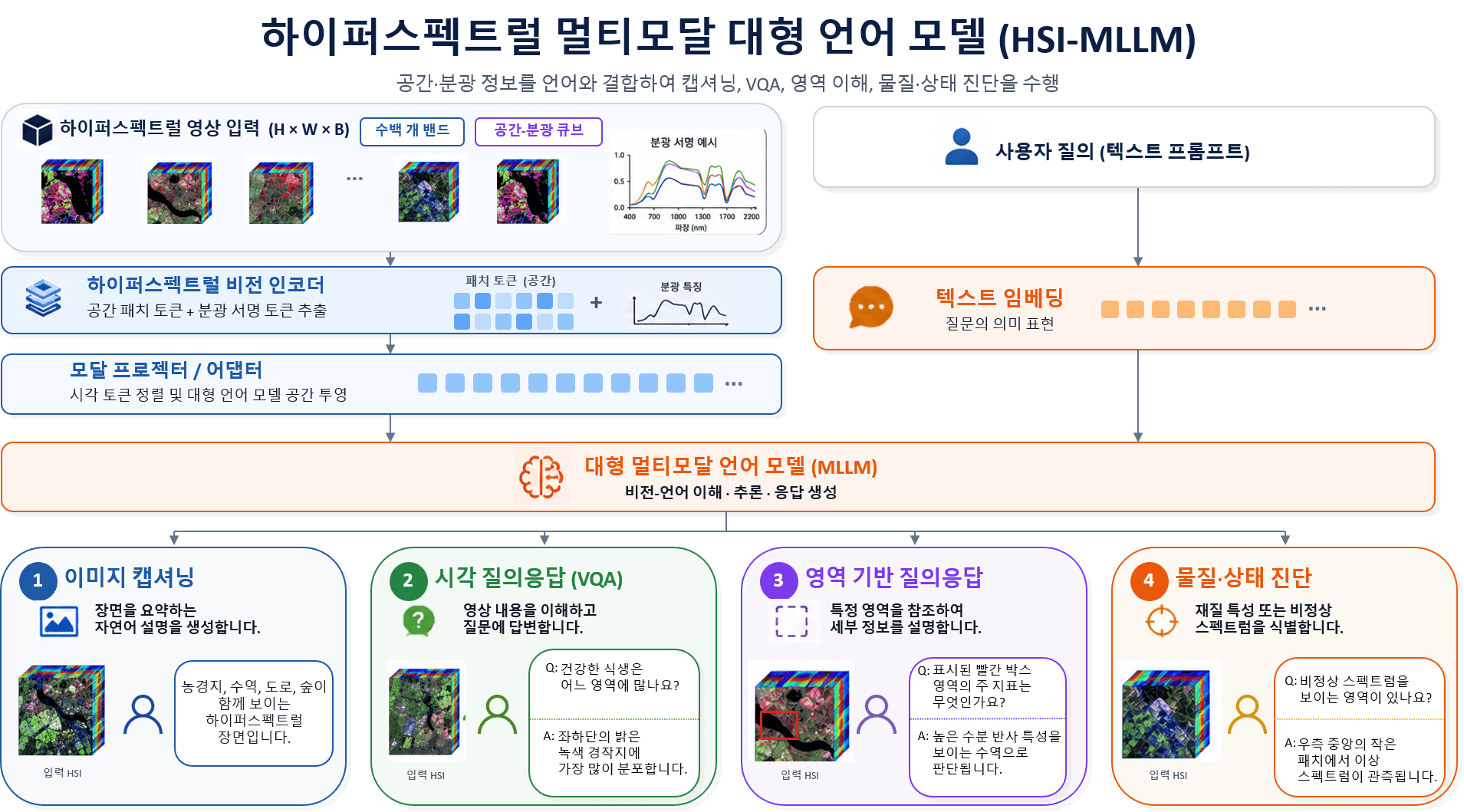
Hyperspectral Vision-Language Models
Hyperspectral vision-language models aim to connect spectral visual information with natural language descriptions, questions, and semantic concepts. We are interested in building multimodal models that can align hyperspectral or remote sensing imagery with text, support visual question answering, and reason about materials, land cover, anomalies, or scene-level semantics beyond conventional RGB understanding. This direction is well suited for students interested in vision-language models, multimodal learning, remote sensing, spectral representation learning, and language-guided visual understanding.
Recent Publications
Chebyshev Differential Flows for Shape Matching and Interpolation with Endpoint Guidance
Jiin Im, Sisung Liu, Je Hyeong Hong
Conference on Neural Information Processing Systems (NeurIPS) 2026
Acceptance rate: 25.7%
Perturb, Aggregate then Reconstruct: Consensus Aggregation and Fourier-Attended Multi-Decoders for Reconstruction-based Multi-View Anomaly Detection
Yongho Son, Junyeong Yun, Je Hyeong Hong
ACM International Conference on Multimedia (ACM MM 2026)
Join Our Lab
We are recruiting motivated students interested in computer vision, spatial AI, medical AI, and physics-informed machine learning.
Contact Us
Location:
Koo Ja-Kyum Mech. Eng. Bldg., Room 1008
Hanyang University
222 Wangsimni-ro
Seongdong-gu
Seoul, 04763
Republic of Korea
Email:
jhh37 at hanyang dot ac dot kr
Telephone:
02-2220-2489